
Dry Needling
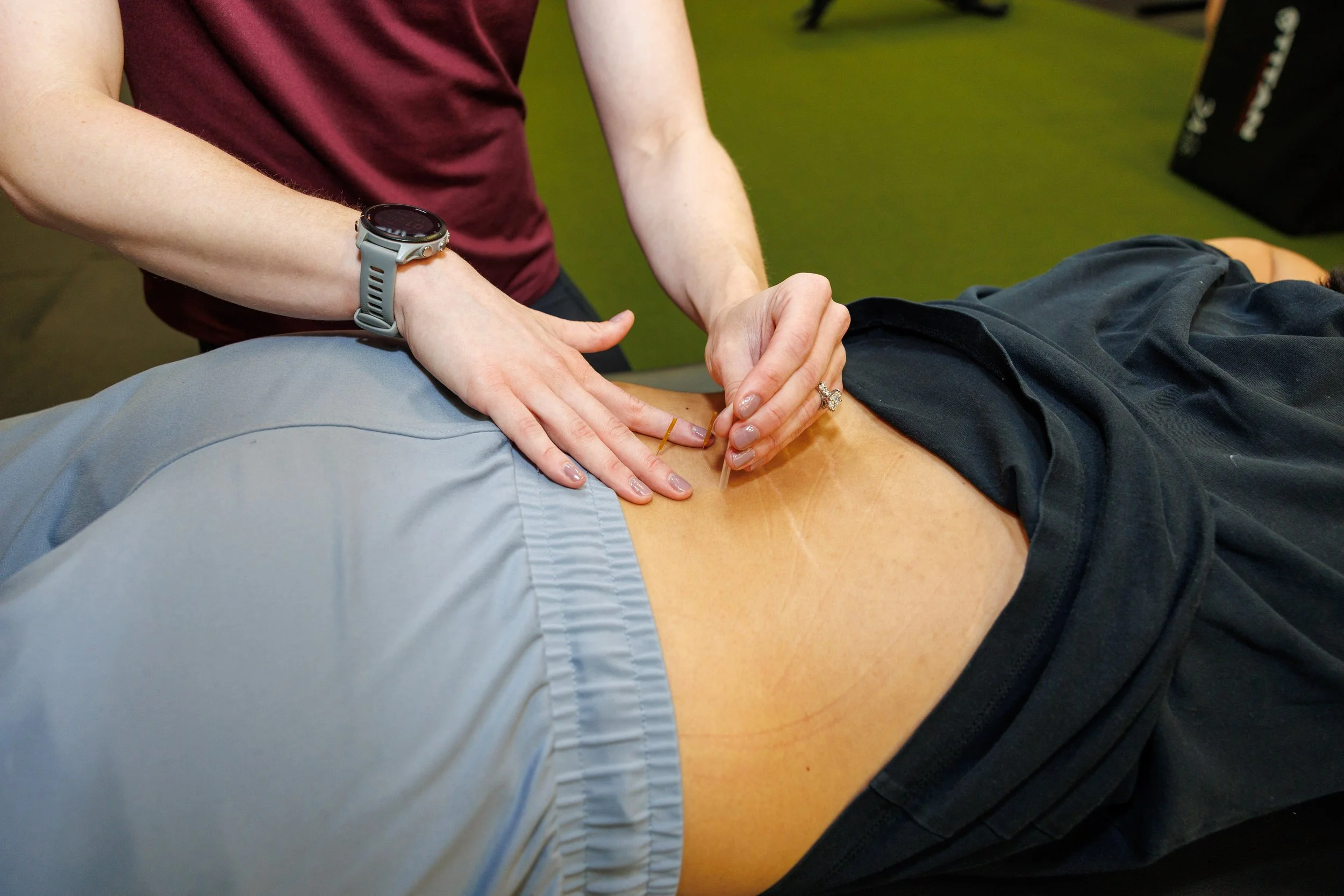
Dry needling is a targeted, evidence-based intervention used to address pain and dysfunction in muscle and connective tissue. It involves the use of a thin, sterile needle to target myofascial trigger points—localized areas of increased sensitivity within a muscle that can contribute to pain, stiffness, and reduced range of motion. Research supports dry needling as a way to decrease pain, improve range of motion, making it a valuable tool within a comprehensive rehab plan.
From a physiological perspective, dry needling influences both the local tissue and the nervous system. It can increase blood flow, reduce chemical irritation, and modulate pain signaling, often leading to short-term improvements in pain and mobility. This creates a window of opportunity to move more freely and load the body more effectively. It’s important to understand that dry needling doesn’t simply “release knots,” but instead helps change how the muscle and nervous system interact—setting the stage for more meaningful, long-term progress when combined with exercise.
You may benefit from dry needling if you’re having:
Persistent muscle pain and soreness
Trigger points or noticeable “knots” in muscles
Limited range of motion due to muscle tension
Recurring injuries or ongoing chronic pain
You might consider dry needling if you’re:
Seeking targeted relief from muscle pain & tightness
Looking for a complementary treatment to enhance your physical therapy outcomes
Interested in accelerating recovery from sports or overuse injuries
At Unlimited, dry needling is used intentionally as part of your individualized plan of care. It plays a key role in the “restore” phase of our process by helping reduce pain and improve mobility, allowing you to better tolerate the “build” phase where strength and capacity are developed. The goal isn’t just to help you feel better in the short term—but to help you move better, perform better, and stay pain-free long term.