
Blood Flow Restriction Training
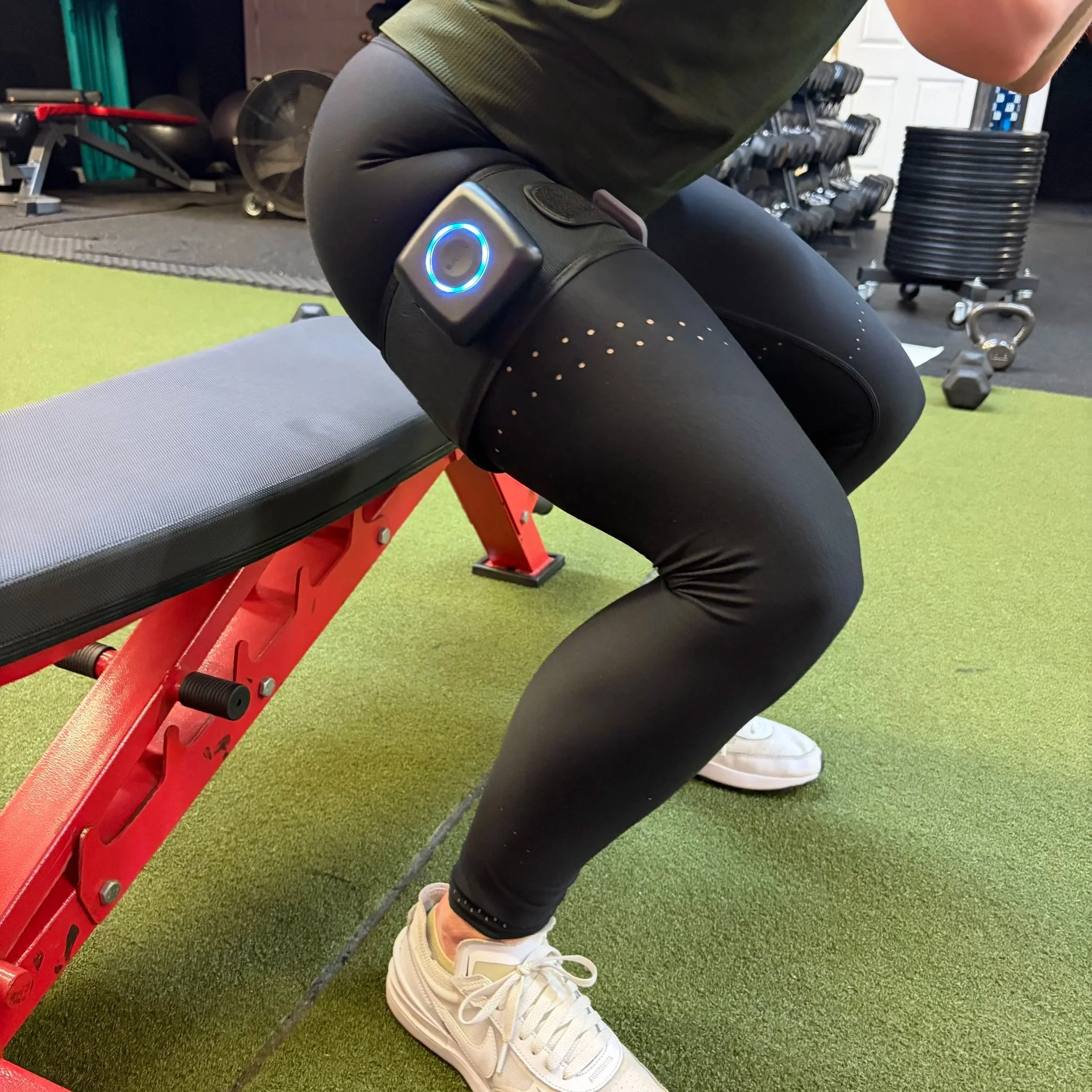
Blood Flow Restriction (BFR) training is an evidence-based technique that allows you to gain the benefits of heavy strength training—up to ~70–80% of your one-rep max, while only lifting light loads, typically around 20–30%. This makes it an incredibly effective option for building strength and improving performance without placing excessive stress on injured or healing tissues.
BFR works by using specialized cuffs placed around the arm or leg to partially restrict blood flow during exercise. This creates a low-oxygen environment in the working muscles, causing earlier muscle fatigue and a bigger internal training stimulus—similar to what you would experience with heavy lifting. As a result, the body recruits more muscle fibers and increases protein synthesis, both of which are key drivers of improving strength.
One of the biggest advantages of BFR is its ability to bridge the gap between injury and full return to training. In many cases, traditional strength training loads are either too painful or not appropriate early in rehab. BFR allows us to safely load the tissue, maintain or even build strength during periods when heavier lifting isn’t an option. Research has shown that BFR can be particularly beneficial following surgery or in the early stages of rehab when tissue tolerance is limited.
You may benefit from BFR if you’re:
Recovering from an injury or surgery and unable to tolerate heavy loads
Dealing with persistent pain that limits your ability to strength train
Looking to maintain muscle mass during periods of reduced activity
Trying to build strength while minimizing joint stress