
Training Through Pain vs Training Smart: From a Former Division I Athlete
I grew up doing gymnastics. From a very young age, it was drilled into me to “suck it up” and to keep quiet if I had any pain or complaints. To put it simply, I was taught to be a little robot. I then went on to do Division I gymnastics and ended up having four surgeries in a year and a half. Having to medically retire before my senior year was not a great way to end all of those years of blood, sweat, and tears. While this chapter of my life was incredibly difficult, it taught me something invaluable: the importance of teaching athletes how to understand their bodies and advocate for themselves.
Pain and injuries are a part of sport, there is no denying that. Often, it is actually safe and okay to push through some pain. That being said, pushing through pain is not always a badge of honor, and doing so blindly can lead to bigger issues down the road. When you train through pain, your body will find a way to work around the problem. This leads to compensations to protect the injured area, which increases load elsewhere and can often create another injury.
Let’s take a deep dive into when it’s okay to push through pain, when it’s not, and how to train smart this season. Learning the difference in training through pain and training smart can be the difference in consistency, not feeling like you have to “start over” constantly, and reaching your long term goals.
Pushing Through Pain May Not Be A Problem - Ignoring It Is
As a sport PT, I likely have a different perspective on “pushing through pain” than many expect. There are plenty of situations where it is safe and appropriate to train with some pain or discomfort. That being said, it shouldn’t be ignored.
When you train through pain for extended periods of time, your body will find a way to work around the problem. This usually means compensation, which increases the load and stress placed on other issues. This can lead to completely avoidable secondary injuries.
Learning when to push, when to modify, and when to go see a provider is the foundation for training smart.
I Rarely Tell Someone To Not Do Activity
One of the biggest fears patients have about seeing a physical therapist is being told to stop doing the activity they love. In reality, I almost never completely shut someone down. Outside of major surgeries, total rest is almost never the answer. For most people, training smart doesn’t mean completely shutting down. In many cases, it is just a matter of making modifications.
This may include:
Reducing volume
Adjusting exercise selection
Changing training frequency
Sport specific changes - could be changing surface for runs, landing surface for gymnasts, changing indy drills for football
The overarching goal is to help keep you as active as possible while protecting the injured tissue.
“Okay Pain” vs “Bad Pain”: How to Tell the Difference
Understanding how to categorize pain is a helpful tool for feeling confident in training. Everyone experiences pain differently, but here are some guidelines that can help determine if it is safe to train through your discomfort or needs attention.
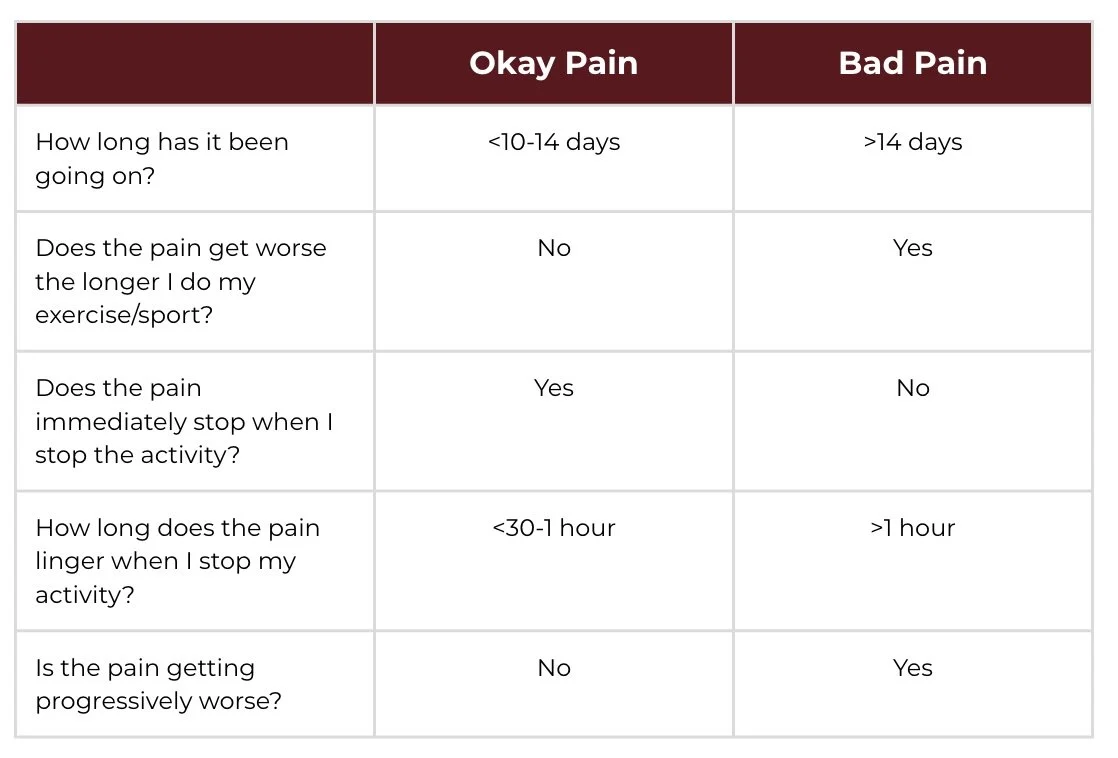
Now what?
If many of your answers were in the “bad pain” column, it’s probably time to consult a trusted sports physical therapist. I see patients every day who put off going to a physical therapist for much longer than they should for fear of being told to stop the activity they love. In most cases, that simply isn’t necessary or appropriate.
Mental toughness is important, but so is longevity. Training smart allows you to stay consistent, avoid chronic injuries, and keep you progressing toward your long-term goals instead of constantly starting over.
The Role of Sports Physical Therapy
A sports physical therapist can help determine if pain is safe to train through or needs to be addressed. More importantly, they can help you understand why the pain started. This helps you prevent it from coming back!
At Unlimited Physical Therapy & Sports Performance, we help active adults in Durham, Raleigh, and Chapel Hill:
Understand the difference in “okay pain” and “bad pain”
Modify training without shutting you down
Identify and correct the root cause of your pain
Progress safely back to prior level of performance
Early intervention often means less visits, less time on the sidelines, and better long term results. If your pain has been going on for longer than two weeks, it’s time to find a trusted provider.
Book Your Discovery Call
Grinding through pain feels productive, until it sidelines you. Training smart means listening to your body, addressing weaknesses early, and moving with confidence. At Unlimited Sports Physical Therapy & Performance in Durham, NC, you get 1-on-1 care from someone who’s been in your shoes as an athlete. If you want to stay healthy, strong, and competitive long-term, click below to book your free discovery call and start training the right way. Have a friend you know that needs some help? Send them this article.
